
Mail Correspondence with Soldiers at War (“Feldpostbriefe”): Letter from a mother to Adolf Hitler after the German invasion of the Sudeten territories in September 1938 (Published on 20/09/2022, latest revision on 06/04/2026)
I. The Critical Voices of the Few
Alongside widespread support for the Nazis’ ideas and plans among the German population at the time, there were also recurring skeptical voices calling for reason and the preservation of peace. Certainly, there were relatively few who, despite the threat of serious consequences, spoke out and actively advocated for their beliefs.
II. A Letter from a Mother to Adolf Hitler in September 1938
Among these voices is a letter from an anonymous mother to Adolf Hitler, who, following the German invasion of the Sudetenland in September 1938 — about a year before the start of World War II — appealed in passionate terms for the preservation of peace.
She wrote (source: Lilli Vetter, Briefe aus jener Zeit (1948), p. 87 f. [translation from German language]):
“To Adolf Hitler
You must know that thousands of mothers are praying for peace these days — the mothers whose husbands fell in the world war, whose sons do not know their fathers because foreign soil already covered them when the son was born.
These sons are now grown up. Once again the hopes blossom in the mothers, which the early death of the men already once nipped in the bud.
You, Führer, live among men, and in the days of decision you will listen to the words of these men and hardly seek the advice of women.
But before you give the sign that unleashes the war furies anew, hear the word of a mother calling out to you: Go into the halls where the women in labor wrestle with the new life, listen to the screams of anguish of the women in labor, witness the hell that every woman goes through before the new life tears itself loose from her and she — plunged into all the abysses of pain, thrown on all the peaks of despair — is nothing but a helpless creature, with the naked fear of death on her face, until at last the new life is released and the tormented creature becomes a smiling Madonna, even the most inconspicuous, most miserable being transfigured and sanctified by maternal happiness, by the newborn she now holds in her arms and around whom all her dreams, all her wishes, all her hopes entwine.
Women are not cowards. Every woman who goes into the horrors of childbirth for the second, third and more times is as brave as the brave soldier who puts his life on the line. Of course, women are soldiers of life, not of death. For life they fight, for life they suffer; for they receive life, they bear life, and they guard life. Soldiers of death are the men. Our men went to death without complaint. Our sons will do the same when it is required of them.
But before you give the order that sends these sons after the fathers, look to the east, and look to the west, look at the hundred thousand scattered crosses. Fix your eyes first on the mothers and then on the crosses. –
P R E S E R V E P E A C E F O R U S!”
It didn’t help, but it wasn’t in vain either.
III. Lilli Vetter, Briefe aus jener Zeit (Letters from That Time)
Also noteworthy is the source of this letter: the book “Briefe aus jener Zeit”, published in 1948 by Lilli Vetter. It is a collection of documents from the era of National Socialism and World War II that offers insights into the thoughts and feelings of various German people during the Nazi era and serves to document the horrors and resistance in the “Third Reich” through primary sources from different spheres.
It includes, among other things, farewell letters and messages from resistance fighters, letters from mothers, letters from soldiers, as well as letters from children and young people, thus reflecting a broad social spectrum of that era.
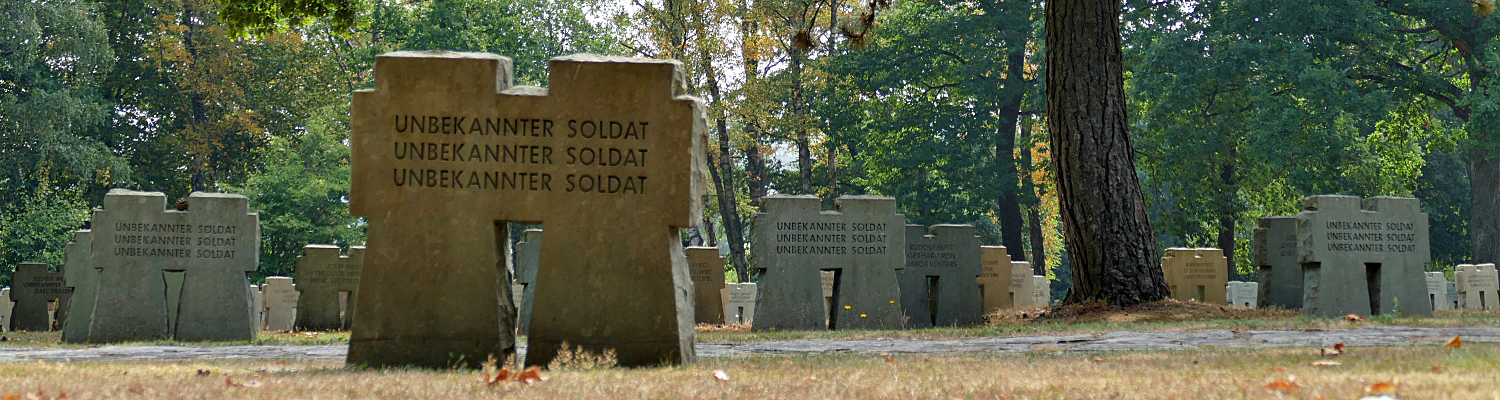
(Head picture: German military cemetery Hürtgen, August 2022)
If you wish to support my work, you can do so here. Many thanks!