
Mail Correspondence with Soldiers at War (“Feldpostbriefe”): Letter of US soldier Walter J. Slatoff to his son during World War II (Published on 28/12/2022, latest revision on 30/03/2026)
I. The 78th U.S. Infantry Division
One of the U.S. units deployed to the hotspots of the fighting in the Hürtgen Forest, particularly in late 1944 and early 1945, was the 78th U.S. Infantry Division, known as the “Lightning” Division. Among other engagements, it fought for Westwall bunkers in the Raffelsbrand area and was involved in the heavy fighting around Kesternich.
II. Letter from Walter J. Slatoff to his son about the war
Walter Jacob Slatoff, who later became a professor of English literature at Cornell University, served in its 310th Infantry Regiment. He wrote a moving letter to his son explaining the meaning of war and urging him to do everything in his power to preserve peace. His letter was reprinted in the history of the 78th U.S. Infantry Division; it reads as follows (source: Brubeck/Hollins, The story of the 310th infantry regiment, 78th infantry division in the war against Germany, 1942-1945, p. 8 f.):
More terrible than all the words
“MY SON:
War is a more terrible thing than all the words of man can say; more terrible than a man’s mind can comprehend.
It is the corpse of a friend; one moment ago a living human being with thoughts, hopes, and a future – just exactly like yourself – now nothing.
It is the eyes of men after battle, like muddy water, lightless.
It is cities – labor of generations lost – now dusty piles of broken stones and splintered wood – dead.
It is the total pain of a hundred million parted loved ones – some for always.
It is the impossibility of planning a future; uncertainty that mocks every hoping dream.
Remember! It is the reality of these things – not the words.
It is the sound of an exploding shell; a moment’s silence, then the searing scream ‘MEDIC!’ passed urgently from throat to throat.
It is the groans and the pain of the wounded, and the expressions on their faces.
It is the sound of new soldiers crying before battle; the louder sound of their silence afterwards.
It is the filth and itching and hunger; the endless body discomfort; the feeling like an animal; the fatigue so deep that to die would be good.
It is battle, which is confusion, fear, hate, death, misery and much more.
The reality – not the words. Remember!
It is the evil snickering knowledge that sooner or later the law of averages will catch up with each soldier, and the horrible hope that it will take the form of a wound, not maiming or death.
It is boys of 19 who might be in the schoolroom or flirting in the park; husbands who might be telling their wives of a raise – tender and happy-eyed; fathers who might be teaching their sons to throw a ball – bright with pride. It is these men, mouths and insides ugly with hate and fear, driving a bayonet into other men’s bodies.
It is ‘battle fatigue’, a nice name for having taken more than the brain and heart can stand, and taking refuge in a shadowy unreal world.
It is the maimed coming home; dreading pity, dreading failure, dreading life.
It is many million precious years of human lives lost; and the watching of the loss day by day, month by month, year by year, until hope is an ugly sneering thing.
Remember! Remember and multiply these things by the largest number you know. Then repeat them over and over again until they are alive and burning in your mind.
Remember! Remember what we are talking about. Not words; not soldiers; but human beings just exactly like yourself.
And when it is in your mind so strongly that you can never forget; then seek how you can best keep peace. Work at this hard with every tool of thought and love you have. Do not rest until you can say to every man who ever died for man’s happiness: ‘You did not die in vain.’”
Cpl. Walter J. Slatoff
Reg. Hq. Co. 310 Inf.
III. Biographical data
Walter J. Slatoff, born on 01/03/1922 in Manhattan, New York County, USA, survived World War II and taught English literature at Cornell University from 1955 until his retirement in 1989. He died on 16/02/1991, in Ithaca, Tompkins County, USA.
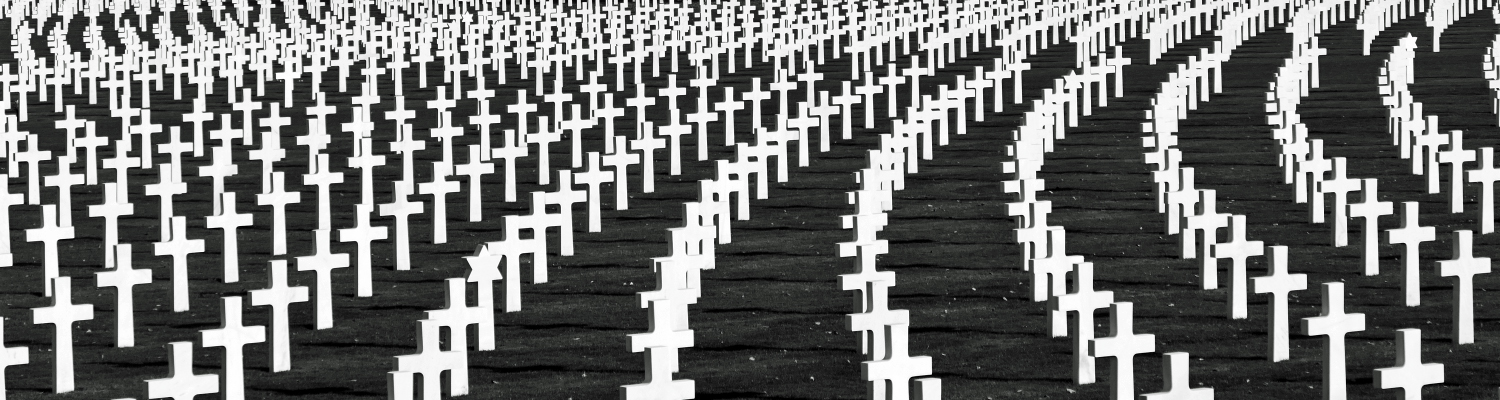
(Head picture: US Military Cemetery Henri-Chapelle/Belgium, October 2018)
If you wish to support my work on Julius Erasmus, you can do so here. Many thanks!